Hi there again. Its nice to meet everyone again through my 4th blog post. I have shared many of my thoughts about different aspects of media in my previous posts. Today the idea that I am going to cover is:
Does it really matter who owns the media in any given country?
Yeah my dear classmates. We just discussed about this and did a presentation about it last week. Hence, we should have a good knowledge about this topic. We have researched about media in different countries and we have our own stand on which media ownership is best for a country. We know the difference between Private-owned media and Government owned media.
1. Government owned media will have a high level of censorship whereas private owned media will not have as much.
2. Government owned media will not facilitate the expression of people as much as private owned media.
These are the two main differences we are going to look into. Let me tell you my stand in this debate.
Singapore:
There is such a wide variety of media availability in Singapore. We have access to reasonable amount of content. Or at least that is what we think we have. But, when we take a deeper look, we realize that censorship is very strict here. Contents that we receive are filtered before made available to us. So, it is obvious that Singapore’s media is under the control of the government.
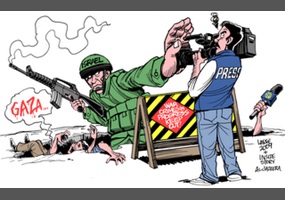
This may seem exaggerated. Singapore’s condition of media is not so intense. But, other countries do have these kinds of situation. We will discuss about it further with the appropriate examples.
Eritrea (Government-owned media):
According to a report in “Committee to Protect Journalists”, Eritrea is the most censored country in the entire world. One of their laws of the freedom of press states that media must promote “National Objectives”. Users are required to visit the internet cafes in order to get access to the internet. This makes monitoring really easy. Even journalists who cross the law lines of media have been perished in custody. When other leading journalists and scholars of Africa petitioned to visit the imprisoned journalists, their request was strictly rejected and their life conditions were never revealed. Foreign journalists who were permitted into Eritrea in the mid-2018 were kept under tight control.

After my read and research about this Unitary one party republic, I felt gifted myself. Having the power of knowledge is a what human kind is known for. Media is the major source for voicing out and pulling attention towards the issues that needs to be dissolved immediately. It also plays a major role in educating the human kind with the world beyond their daily lives. But, it is saddening that in certain parts of the world there are people who have been denied of such rights.
Estonia(Private-owned media):
On the other hand there are countries with extreme freedom of press. Examples of such countries are Estonia, Iceland and a few more. These countries have the least restriction over the content that is made available to audiences. In Estonia, owning a Gambling website is as easy as it being legally authorized with very little restrictions. This shows a lot about the community that the younger generation are growing in. There are more of such examples to prove that restriction-less media is not good for the country.
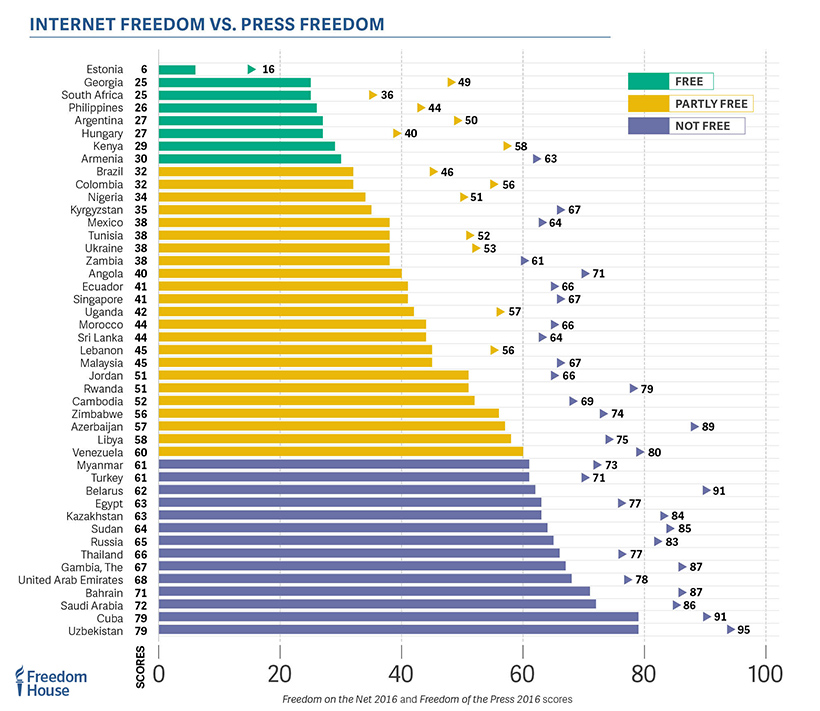


The 1st, 2nd, and 3rd graphs show the internet freedom, the country’s score based on that and internet penetration of them respectively.
Where do I stand about this whole media ownership thing?
Last but not the least, what I feel about this whole media ownership thing is that, freedom of speech, media, knowledge, etc should be made available to all people of all countries yet in a way that the government has an eye over it. This will lead to a perfectly structured media access. I feel that common people should be allowed to access media content that is reasonable and valid to be watched. Unwanted content and excessive unnecessary content can be restricted. But, retaining the peoples’ rights should be kept in mind when clearing out misleading content. Conclusively, media should be owned by the government. But, laws should be made in order to conserve the peoples’ rights to voice out their thoughts.
Thank you all my readers! Meet you guys in my next post.
References:
(“Eritrea”, 2020)
Article title: Eritrea
Website title: Freedomhouse.org
URL: https://freedomhouse.org/report/freedom-world/2019/eritrea
(“Estonia”, 2020)
Article title: Estonia
Website title: Freedomhouse.org
URL: https://freedomhouse.org/report/freedom-net/2017/estonia
(“Freedom on the Net 2016”, 2020)
Article title: Freedom on the net 2016
Website title: Freedomhouse.org
URL: https://freedomhouse.org/report/freedom-net/freedom-net-2016
 Akshaya's Blog
Hey Sha! You are pretty early this time, I’m impressed 🙂
What a solid post! Your flow of thoughts are informative yet simple, it is palatable. The examples you gave to explain private-owned media & government-owned media is interesting, in fact, I never knew that Eritrea & Estonia even exists. Apart from their existence that seems foreign to me, I like how you are able to use them to get your point directly across that actually answered a few questions I had in mind on this topic.
I particularly like the way you summed your stand, ” Conclusively, media should be owned by the government. But, laws should be made in order to conserve the peoples’ rights to voice out their thoughts. “. I agree with this fully! In fact, even though Singapore’s media is owned by the government, we are still able to voice our thoughts with the new media conveniently available at our fingertips.
Therefore, it is not that countries with government-owned media do not accept freedom of speech but rather lacking freedom of speech as some topics like the country’s politics may not be tolerated well for the good interest of the country especially a small nation like ours.
LikeLiked by 1 person
Hello Sha! 🙂
Your flow of writing is straight to the point and very easy to understand. It is also very informative, which shows that you did great research about it.
The examples that you gave were also really interesting. I didn’t know that the media control in Eritrea is so tight. I cannot imagine asking for permission just to access the internet! The people there must’ve been very disassociated with the latest happenings and trends..
I also agree that the media is the one of the main source for the citizens to point out their opinions and views. The citizens in Eritrea must’ve feel very suppressed as they are unable to share their views openly.. I also feel really blessed that even though we are not fully able to say our thoughts openly in Singapore, at least we have the freedom to use the internet.
I can also tell that you support the importance of voicing out your opinions. I also believe that we, as citizens, should have the rights to voice out our thoughts, but at the same time, we should also need to know our limits.
Looking forward to your next blog post! 🙂
LikeLiked by 1 person
Hi Sha!
I mostly agree with your points, and I appreciate the example of how Singapore has not yet misused their power. I feel like Eritrea is a very relevant example of people behind a legislation actually blatantly abusing their power. Currently I am in no real fear of Singapore reaching that level of censorship- I don’t believe a country could do a 180 so quickly. However I’d like to point out when you have regulations in place, extending them is easier. The government controls the media in the name of benefit for the people, but at the moment I doubt they see free speech as a benefit.
I really enjoyed reading this, looking forward to your next post!
LikeLiked by 1 person
Heyo Sha,
Other than the surprisingly friendly introduction it was a really good blog post. The case studies you covered in this post were different than what we presented, and it was a good read. At the end of the day there must be some form of balance, too much freedom and there is no order. Too much constraint and censorship and it’ll be a silenced nation, never getting to voice a different opinion. As with your conclusion it is clear that you share the same thoughts as me, which is great since we worked together last presentation. Looking forward to the next blog posts!
LikeLiked by 1 person
Hi Sha! I love reading your post as it is easy to understand!
I love your choice of examples! I have no idea how tight the regulations is in Eritrea before reading your post. Usually I would just use China or North Korea as example when talking about “most censored country” but now I have learnt a new and useful example. A very informative post!
Same as you, I also feel gifted that I enjoy the freedom of speech and get accessed to the internet and get the information I want. Not everyone on earth have the right to enjoy this freedom and we should treasure and protect it. But at the same time, we should also be responsible of what we said. Troubles could be created if everyone just randomly speak whatever they want. That’s why I agree that the government should own the media, at least to prevent people from spreading false information and harming the society. As you have mentioned, some unwanted content can be restricted but people’s rights should also be retained. There should always be a balance.
Looking forward to your next post!:)
LikeLike
Hi Sha! I loved reading your blog this week. Pretty cool! To be honest, I’ve never heard of those countries so when I read your blog I learned something new HAHAHA. I too agree that the media should be government owned because I believe that some people can be irresponsible when handling certain information and we all saw what happened to Amos Yee! It’s true that we should be given the rights to speak out despite the control. There are some things that is very important to talk about in 2020 and so Singapore should start letting us open up.
Can’t wait to read your blog next week! See you in class!
LikeLiked by 1 person